For many travellers, Indonesia begins with Bali.
And it is easy to understand why. Bali brings together culture, nature, beaches, food, spirituality and an extraordinary range of experiences within a relatively small island.
But Bali is only one part of Indonesia.
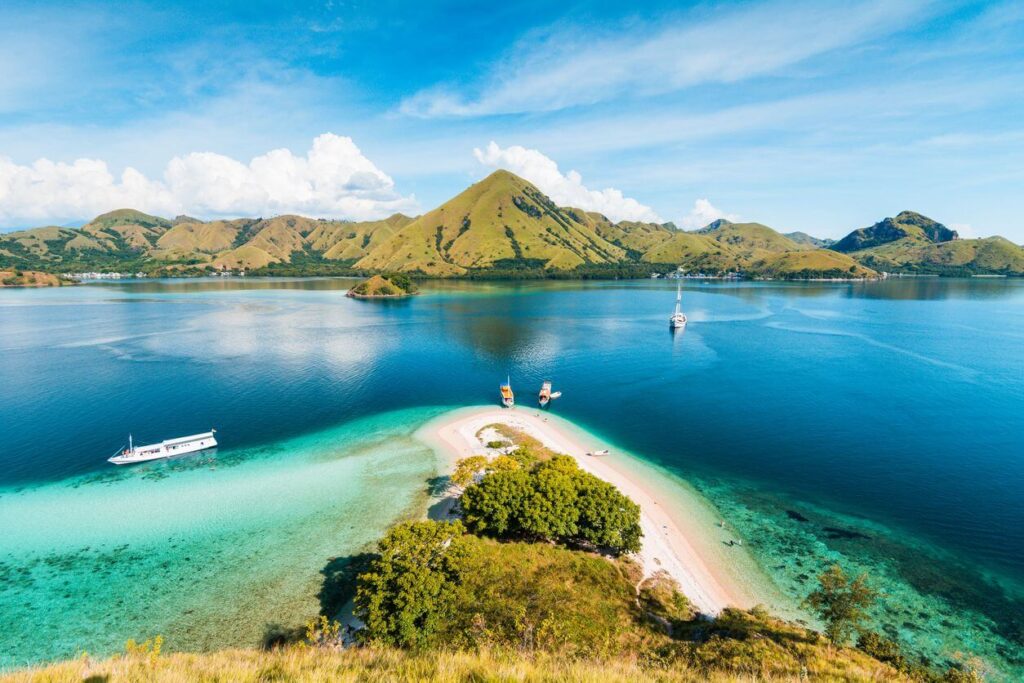
Travel west to Java and ancient temples rise against volcanic landscapes. Head east and Flores leads towards Komodo, where rugged islands meet some of the richest marine environments in the world. Lombok has its own culture and rhythm. Sumba feels more remote and elemental. And Raja Ampat belongs almost to another world entirely.
The challenge is not finding somewhere else to go.
It is deciding which Indonesia is right for you.
Because travelling beyond Bali should not simply mean adding another island to the itinerary. It should add something different to the journey.
For culture, history and extraordinary landscapes: Java
If what draws you to Indonesia is culture, history and a strong sense of place, Java is the natural place to begin.
Around Yogyakarta, some of Southeast Asia’s most important cultural landmarks sit within reach of one another. Borobudur, the world’s largest Buddhist monument, and the Hindu temple complex of Prambanan are both UNESCO World Heritage Sites. Yogyakarta itself remains one of Indonesia’s most important centres for Javanese culture, art and tradition.
Then the landscape changes.
Travel east and Java becomes increasingly volcanic. Mount Bromo rises from an immense sea of sand, while further east the Ijen volcanic region offers an entirely different landscape again.
Java is not an extension of Bali. That is precisely why the two work so well together.
One gives you a predominantly Hindu island culture; the other introduces you to a different history, architecture, religion, food and rhythm of life.
Choose Java if: you want culture, temples, history and dramatic landscapes, and you enjoy a journey that involves moving through a destination rather than staying in one place.
For wildlife, sea and adventure: Komodo & Flores
For a completely different experience, go east.
Labuan Bajo, on the western edge of Flores, is the gateway to Komodo National Park, a UNESCO World Heritage Site encompassing the islands of Komodo, Rinca and Padar as well as an extraordinary marine environment.
The Komodo dragons may be the reason many travellers first put the region on their list, but they are only part of the experience.
Days here can mean sailing between islands, walking across the spectacular ridges of Padar, snorkelling in clear waters and watching the landscape change with every crossing.
But Flores deserves attention beyond Komodo.
Travel further into the island and you encounter traditional villages, mountain landscapes and places such as the volcanic lakes of Kelimutu. It is a very different journey from the more established routes through Bali.
Choose Komodo and Flores if: you want your trip to feel adventurous, you love the sea and wildlife, and you are looking for landscapes that feel genuinely different from Bali.
For island life with more room to explore: Lombok & the Gilis
Lombok is often introduced as an alternative to Bali.
It shouldn’t be.
The island has its own Sasak culture, landscapes and character, from the beaches and surf breaks of the south to rural villages and the imposing presence of Mount Rinjani in the north.
For travellers who want to combine exploration with time by the sea, Lombok works particularly well.
Then there are the Gili Islands just offshore.
Gili Trawangan, Gili Air and Gili Meno each offer a different balance of energy, quiet and island life. They are easy to combine with Lombok or Bali, but they work best when they are not treated simply as another box to tick.
Choose Lombok and the Gilis if: you want beaches and island life to play a bigger role in your journey, without giving up culture, nature and exploration altogether.
For space, tradition and a slower journey: Sumba and Sumbawa
Sumba and Ssumbawa are not the obvious next step after Bali.
And that is part of their appeal.
The landscapes feel wider and more open. Traditional villages preserve distinctive architecture and strong megalithic traditions. In Sumba, horses remain deeply woven into the island’s culture, and stretches of coastline can feel remarkably remote. In Sumbawa, whale sharks are among the island’s most iconic encounters, particularly in Saleh Bay.
Tourism exists here, including some exceptional places to stay, but it has developed very differently from Bali.
Sumba also asks more of the traveller.
Distances are significant, infrastructure is more limited and trying to cover the island quickly defeats much of the reason for going.
This is somewhere to choose deliberately and give time to.
Choose Sumba and Sumbawa if: you are drawn to remote landscapes, culture and a slower form of travel, and you don’t need every day to be filled with attractions.
For a journey built around the ocean: Raja Ampat
There are destinations you add to an itinerary.
And then there are destinations you build the itinerary around.
Raja Ampat belongs to the second category.
Located in Southwest Papua, the archipelago consists of four main islands and more than a thousand smaller islands scattered across one of the most biodiverse marine environments on Earth.
For divers and snorkellers, its appeal is obvious. But Raja Ampat is much more than an underwater destination.
Limestone karsts rise from intensely clear water. Small communities are scattered across remote islands. Reaching the region takes time, which creates a sense of distance that has become increasingly rare in travel.
This is not somewhere we would casually add to the end of a Bali holiday.
It deserves to be one of the reasons for the journey.
Choose Raja Ampat if: the ocean is central to how you travel, you are comfortable going further to reach somewhere exceptional and you have enough time to make the journey worthwhile.
And these are only the beginning
One of the difficulties of writing about Indonesia is knowing where to stop.
There is Sumatra, with rainforests, wildlife, volcanic landscapes and Lake Toba.
Sulawesi, with extraordinary marine environments and cultures found nowhere else in the archipelago.
Kalimantan, where rivers lead deep into Borneo’s tropical landscapes.
The Maluku Islands, once at the centre of the global spice trade.
And countless smaller islands that rarely appear on a first Indonesia itinerary.
Indonesia is not a destination that can be reduced to one kind of experience.
Nor is it a country you need to try to “complete”.
What if you don’t want to choose just one?
This is where planning an Indonesia journey becomes interesting.
Once you realise how much exists beyond Bali, the temptation is to start adding islands.
Java. Bali. Lombok. Komodo. Sumba.
But a better Indonesia journey is not necessarily a bigger one.
What matters is how the destinations complement one another.
Java and Bali create a particularly strong cultural journey, moving between two islands with very different histories, religions and landscapes.
Bali and Komodo/Flores shift naturally from culture and island life towards sailing, wildlife and adventure.
Bali, Lombok and the Gilis work well when you want the journey to gradually slow down and spend more time around the sea.
Bali and Sumba offer a fascinating contrast between two neighbouring islands where tourism, culture and landscape feel remarkably different.
There is no universally perfect combination.
The right one depends on what you want the journey to feel like.
Don’t count islands. Think about contrast.
This is perhaps the most useful way to plan Indonesia.
Instead of asking:
How many islands can we fit into two weeks?
Ask:
What will the next destination add that the previous one didn’t?
If you have already spent days exploring temples and villages in Bali, perhaps the next chapter should be sailing through Komodo rather than another island with a similar rhythm.
If you want history and architecture before slowing down in Bali, Java creates a natural contrast.
If your priority is diving, it may make more sense to build the entire journey around eastern Indonesia rather than trying to attach Raja Ampat to a conventional Bali itinerary.
Each destination should have a reason to be there.
Otherwise, travelling further simply means spending more time in airports, cars, ports and hotel check-ins.
Bali can be the beginning, not the whole story
Bali deserves its place in an Indonesia journey.
But it does not have to carry the entire journey.
In fact, experiencing another part of the country often makes Bali more interesting, because you begin to understand just how different one Indonesian island can be from another.
The architecture changes.
Religion changes.
Food changes.
Languages and traditions change.
Even the landscapes and the relationship people have with the sea and land can feel completely different.
If you are wondering how Bali itself has changed and whether it is still worth including in a trip today, read:
→ Is Bali Still Worth Visiting in 2026? How to Experience the Island Beyond Overtourism
Travel further, not faster
Going beyond Bali should not be about collecting islands. This way of travelling, choosing depth over quantity and making each destination count, is also at the heart of our approach to conscious travel.
→ Conscious Travel in Bali: The 5 C Principles Behind a Better Trip
It should be about widening the experience.
Perhaps Bali gives you culture and ritual, Java history and volcanoes, and Komodo the sea.
Perhaps Sumba is the entire reason you came.
Perhaps your first trip stays mostly in Bali and your second takes you somewhere you had barely heard of before.
There is no single Indonesia to discover.
Bali may be the island that brings you here. Java may be the one that surprises you. Flores may give you the adventure you remember most. Sumba may be the place you weren’t expecting to love.
The point of travelling beyond Bali is not simply to see more.
It is to discover how much more Indonesia can be.
Plan Your Journey
If you want to explore Indonesia beyond Bali, we design personalised journeys around the places that make sense for you — not around how many destinations can fit on a map.
We look at the time you have, the experiences that matter to you and the balance you want between culture, nature, adventure and time to simply enjoy where you are.
Then we connect the right places into one coherent journey.
Tell us what you have in mind, or explore our curated experiences across Bali and Indonesia.